
Joint urban plan for Drogheda back on track after legal challenge- DCSG action forces U‑turn by councils
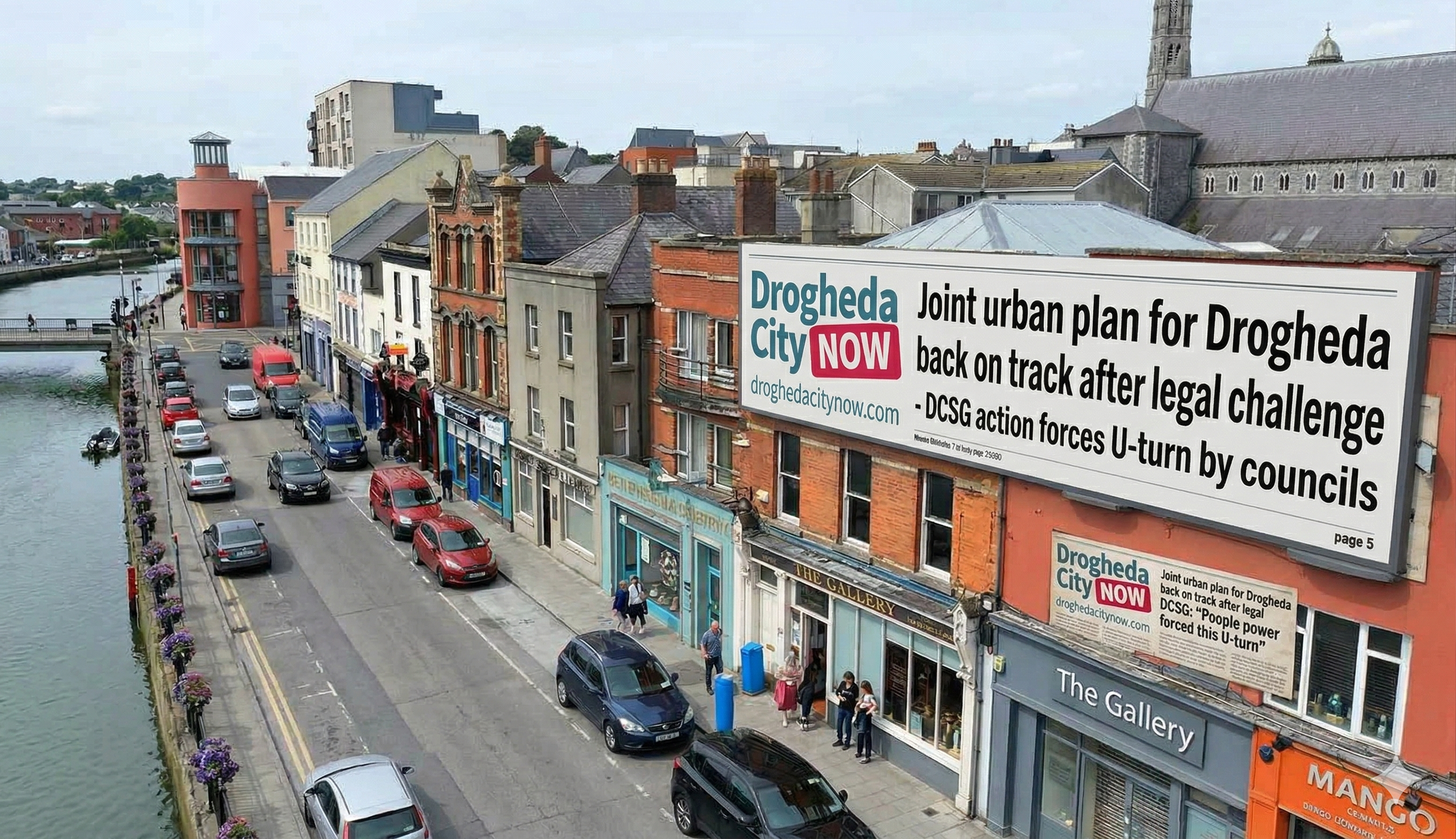
For almost a decade, Drogheda has been growing like a city but planned like an afterthought.
While thousands of new homes have sprung up across Louth and East Meath, the basic framework that should have guided that growth – a modern, joint urban plan for the whole town – simply did not exist.
The last local area plan for Drogheda expired in 2017. Since then, national and regional policy have repeatedly flagged the need for a single, cross‑boundary plan, yet local government allowed the process to stall. Consultations were held, promises were made – and then, in late 2025, the Joint Local Area Plan for Drogheda was quietly dropped, with both councils walking away from the very plan they had asked people to engage with.
A historic core left to rot
On the ground, the impact of that vacuum has been brutal. Development has raced ahead on the edges of town, while the historic core has been allowed to drift into vacancy and dereliction. The streets that should be Drogheda’s beating heart are instead dotted with boarded‑up buildings and empty upper floors, even as new estates sprawl further and further out.
Drogheda Vacancy and Dereliction spokesperson Dom Gradwell put it bluntly:
“The past decade when the plan should have been in place has seen a dramatic increase in vacancy and dereliction throughout the historic core, in marked contrast to other urban areas across the country.”
That contrast is real. Other regional towns have been able to use coherent local plans, regeneration funding and clear governance to tackle dereliction and bring life back into their centres. Drogheda, by comparison, has been left trying to patch over problems building by building, street by street, without the strategic backbone a joint plan should have provided.
Two councils, no single vision
Drogheda City Status Group (DCSG) has spent years arguing that this is not a series of isolated problems, but the predictable outcome of fragmented local government and a refusal to plan Drogheda as one urban whole. The nine‑year gap since the last plan lapsed is their Exhibit A.
As DCSG puts it:
“The nine‑year gap since the last plan lapsed is a stark demonstration of how fragmented local government has failed Drogheda, with two councils and no single vision for housing, transport, employment and amenities. Freedom of information requests revealed that the two councils did not even formally consult one another before deciding to drop the joint plan – a clear failure to govern a city‑scale community.”
Behind those words is lived reality:
Commuters stuck in daily gridlock while long‑promised transport hubs and routes stall.
Families in new estates scrambling for school places, sports facilities and safe walking routes.
Businesses trying to trade in a town centre scarred by long‑term vacancy and dereliction.
All of this in a place that independent research now routinely describes as an “emerging sixth city” and one of the fastest‑growing urban areas in the State.
People power forcing the U‑turn
The recent decision by Louth County Council and Meath County Council to finally move ahead with a coordinated urban plan for Drogheda did not come out of nowhere. It came after years of campaigning, evidence‑gathering and, ultimately, the threat of legal action by DCSG and partner groups, including Development Perspectives and Drogheda Vacancy & Dereliction.
Their message to the system was simple: if you will not plan Drogheda properly, we will compel you to. If you will not treat this place as a city‑scale community, we will show – in court if necessary – that your own laws require you to.
That is what makes the latest U‑turn so significant. It is not charity from above; it is the direct result of organised residents, community groups and campaigners refusing to accept another lost decade.
Where we go from here
A plan on paper will not, by itself, repair derelict buildings, deliver new schools or fix broken transport links. But without a serious, joint plan for the whole urban area, those things were never going to happen in a coherent way.
The question now is whether the new coordinated plan will genuinely confront the damage caused by years of drift – tackling vacancy and dereliction in the historic core, catching up on missing infrastructure, and putting community facilities and local jobs on the same footing as housing numbers.
That will only happen if the same people power that forced this U‑turn now stays at the table: turning up to consultations, challenging weak proposals, and insisting that Drogheda be planned as the city it already is in everything but name.
If you care about what happens next – if you are tired of watching your town centre crumble while new estates march across the horizon – now is the time to get involved.
Join the campaign, add your voice and stay informed at www.droghedacitynow.com.