Is Drogheda a City? Why Ireland’s 4th‑Largest Urban Area Still Isn’t Recognised
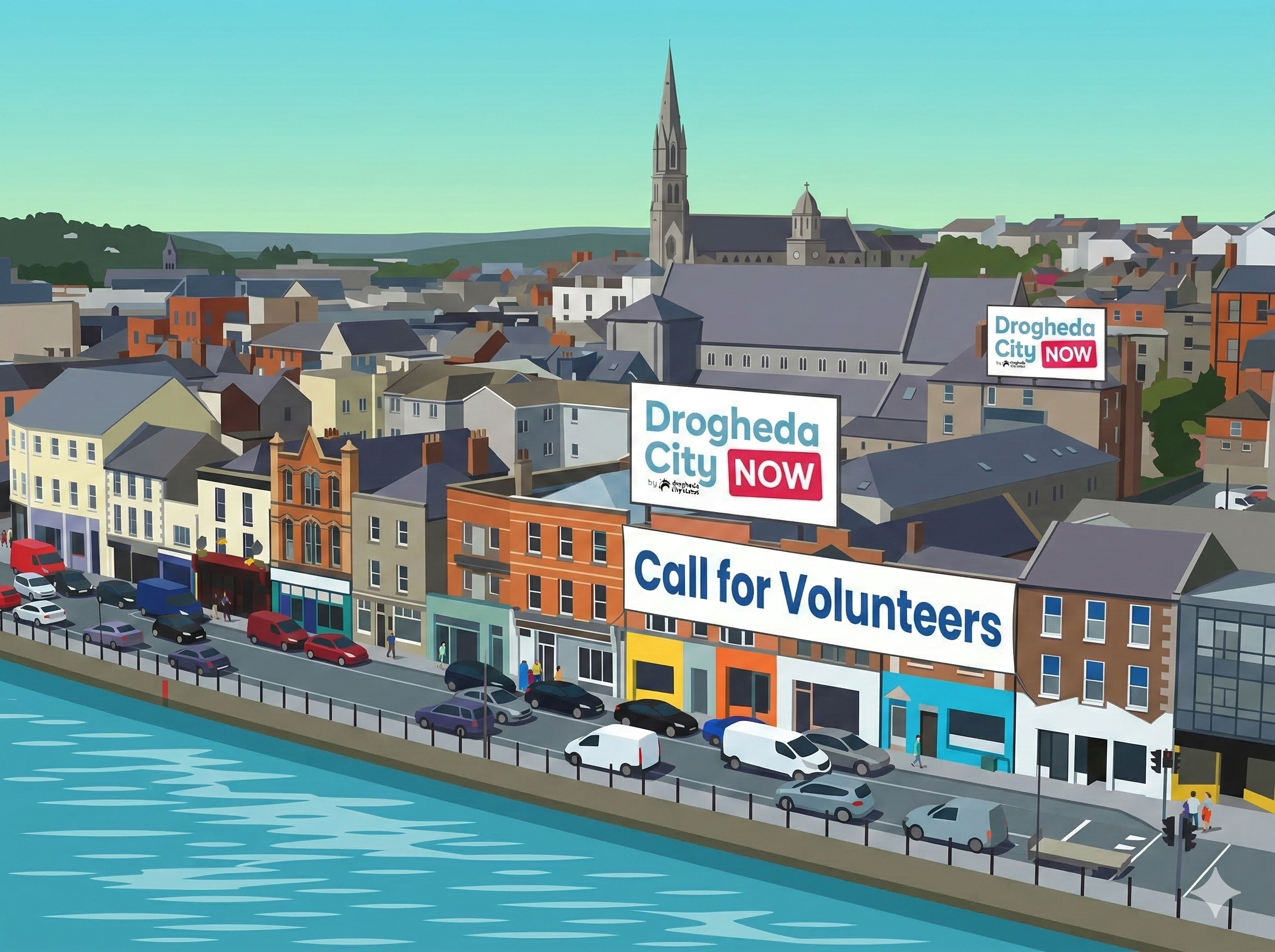
Drogheda already meets or exceeds many of the population, economic, and “everyday life” tests people instinctively use to recognise a city—but because it is still officially a town, the funding, planning and governance do not match the real scale of its problems or its potential.
Drogheda by the numbers
Official data and local analysis now put Drogheda firmly in city territory on population alone.
The urban area has passed the 50,000 population benchmark that the EU commonly uses to define a city.
The wider functional area centred on Drogheda is around 70,189 people, making it effectively Ireland’s 4th‑largest urban area.
Projections based on current building and migration trends point to around 54,000 people in the town and 85,000+ in the Greater Drogheda area by 2026/27, larger than or comparable with Galway, Limerick and Waterford.
Despite this, Drogheda is still treated as a “large town” in official classifications, which determines how it is funded and managed.
Housing and growth pressure
Recent analysis using the Irish Times / onemillionhomes housing tool shows Drogheda Rural has the shortest waiting time in Ireland for a first‑time buyer to get a home—around eight years at current build rates. That’s dramatically better than parts of Dublin, but still a long delay for young households trying to put down roots in an area growing faster than almost anywhere else in the State.
The same dataset identifies Drogheda Rural as the fastest‑growing electoral area in the country, with around 630 homes built last year for a non‑homeowner target population of just over 5,000. Alongside this private supply, Louth has delivered a record 562 new social homes in 2025, and a further 23 A‑rated cost‑rental homes at Tullybrook in Drogheda opened applications in early 2026.
All of this means Drogheda is exactly where Ireland is actually building the homes the country says it needs—but there is still no single city‑level authority matching that housing growth with transport, schools, health facilities and public space across the whole functional area.
A retail and services footprint that looks like a city
The everyday experience of shopping and services in Drogheda is already “city‑like”. Tesco alone operates three full stores serving the town and its catchment—a Metro store on West Street, a large Extra on Donore Road, and a major supermarket at M1 Retail Park—something you would normally associate with an urban area of 70,000–80,000 people.
Scotch Hall Shopping Centre is celebrating 20 years as a regional‑scale retail and social hub, bringing national brands and strong local independents under one roof and drawing visitors from a wide hinterland. Love Drogheda BID’s local gift card programme now has hundreds of participating businesses and continues to grow, underlining the density and diversity of Drogheda’s town‑centre offer.
In simple terms: the marketplace, shopping patterns and service footprint are those of a small city. The label on the map has not caught up.
Safety, crime and a maturing night‑time economy
Drogheda still features in national and international coverage of serious crime and high‑profile Garda operations, including gangland investigations that make headlines well beyond Louth. That is part of the reality of being a large urban centre on the Dublin–Belfast corridor, with all the complexity that brings.
Yet alongside this, Drogheda has retained its international Purple Flag accreditation for a safe, well‑managed evening and night‑time economy—an award normally associated with city centres like Dublin or Cork. Local businesses, Love Drogheda BID and Gardaí have agreed a new Purple Flag charter for the town and publicly welcomed enhanced Garda presence, including a Community Safety Van on West Street and more visible patrols.
This combination tells a clear story: Drogheda experiences city‑scale safety challenges, and it is already responding with city‑style coordination—but without the structures and resources of an actual city council behind it.
Cleanliness, public realm and quality of life
On litter and streetscape, Drogheda has gone from being near the bottom of national rankings to being rated “Clean to European norms” in Irish Business Against Litter (IBAL) reports. This turnaround has been driven by:
Intensive cooperation between Love Drogheda BID, Louth County Council and Drogheda Tidy Towns.
A substantial increase in Tús litter‑picking and public‑realm teams working across the town centre.
Again, the pattern is familiar: Drogheda is having to assemble city‑standard services through partnerships and voluntary effort, rather than having a single, well‑resourced city authority with clear responsibility for its public realm.
The governance problem: decisions about Drogheda, not by Drogheda
The gap between Drogheda’s reality and its status is most obvious when big decisions are made.
Local businesses and community groups strongly criticised the Government decision to remove the d Hotel from use as visitor accommodation, warning it would damage the tourism, hospitality and retail economy and pointing out it removed the town centre’s only fully wheelchair‑accessible hotel. Love Drogheda BID has called for “better and more balanced decision‑making”, noting that key calls affecting Drogheda’s future are often taken with little local input.
More broadly, responsibility for Drogheda is still split between two county councils (Louth and Meath) and multiple national departments, echoing the “poor relation” problem you’ve already highlighted: nobody is fully in charge, and crucial recommendations from boundary and status reviews can sit ignored for years.
A city‑scale population is therefore being managed through fragmented town‑scale governance.
The funding gap: city‑level needs, town‑level money
Because Drogheda is officially a town, it receives funding closer to the “town rate” of around €110 per person for infrastructure, which equates to about €7.7 million a year for a functional urban area of roughly 70,000.
Comparable Irish cities typically receive around €435 per capita, which would mean about €30.5 million a year if Drogheda were resourced at city level. The result is an annual shortfall of approximately €22.8 million—money that simply does not arrive because the label on Drogheda says “town” instead of “city”.
You have already translated what that missing funding could do each year:
Roughly 40 km of new cycle lanes.
Two new schools every year, relieving pressure from rapid population growth.
Around 15 park renovations, improving quality of life and attractiveness to visitors.
In other words, the very problems people most often complain about—traffic, school places, lack of amenities—are exactly the things that city status funding would help to fix.
How city status would match problems with solutions
Taken together, the recent stats and news build a consistent case:
Population and growth: Drogheda is already at or above the EU’s 50,000 city threshold and is on course for 80,000+ in its wider area within a couple of years.
Housing: It has the shortest first‑time buyer wait in Ireland, but only because it is building at a national‑leading pace, piling pressure on services unless planning and investment catch up.
Economy and retail: Three Tesco stores, a long‑established regional shopping centre and a dense independent sector show a catchment and spending pattern typical of a city, not a town.
Safety and public realm: Drogheda is tackling city‑scale safety and cleanliness challenges with Purple Flag standards and improved litter rankings, but is still reliant on patchwork governance and short‑term fixes.
Funding and governance: A €22.8 million yearly funding gap and split responsibility between Louth and Meath mean Drogheda is, in effect, a city being run on town budgets and town structures.
City status is not just about prestige. It is the mechanism that would:
Create a single Drogheda City Council responsible for the whole functional area, ending split estates and duplicated effort.
Unlock city‑level investment in transport, schools, housing, parks and culture to match a city‑scale population.
Give Drogheda a clear democratic voice—residents and businesses knowing who is in charge and being able to hold them to account.
Support the work already being done by Love Drogheda BID, Drogheda City Status Group and others with a statutory city framework instead of relying solely on voluntary coalitions.
What Drogheda City Now is doing—and how to join
Drogheda City Now is a community‑led campaign bringing residents, businesses and local partners together to secure full city status and to act like a city while we work for it.
The campaign focuses on four main strands:
Advocacy: Making the case for a unified Drogheda City Council and implementing long‑standing boundary and status recommendations.
Investment: Pressing for city‑level infrastructure funding so Drogheda gets the same per‑person support as Ireland’s existing cities.
Events and local economy: Running city‑style events that boost local life, footfall and spending, proving in practice that Drogheda already functions as a city.
Membership and voice: Building a strong base of residents and businesses whose combined membership profile and stories show clearly why city status is needed.
If you live, work or do business in Drogheda, you are already living in a city in everything but name.
City status is how we finally align the name, the funding and the decision‑making with the reality on the ground.
Join as a member today at droghedacitynow.com and help create the city Drogheda already is.